An off road electric bike is built for riders who want motor-assisted performance beyond smooth city streets. These bikes combine electric power with wider tires, stronger frames, capable brakes, and suspension systems designed for gravel, dirt roads, forest trails, hills, and uneven terrain. Depending on the model, an electric off-road bike may resemble a mountain bike, fat-tire bike, or electric dirt bike. Choosing the right one means looking beyond motor wattage and considering battery range, suspension, tire type, brakes, fit, weight, and the terrain you plan to ride.
What Is an Off Road Electric Bike?
An off road electric bike is an e-bike designed to handle rougher surfaces than a typical urban commuter. Most models feature reinforced components, improved traction, stronger braking, and suspension to help manage bumps and loose terrain. Some are conventional pedal-assist bicycles, while others are more powerful dirt-bike-style machines that may fall under different legal classifications.
How Off Road Electric Bikes Work
Like other e-bikes, off-road models use a rechargeable battery to power an electric motor.
The motor may activate through pedal assistance or a throttle, depending on the design. Pedal-assist systems amplify your pedaling, while throttle-equipped models can provide power without constant pedaling.
The amount of assistance usually depends on the selected riding mode.
Common Off-Road Uses
These bikes can be useful for:
- Gravel roads
- Forest trails
- Dirt paths
- Hilly terrain
- Farm roads
- Hunting access
- Recreational trail riding
- Private off-road property
Always confirm whether electric bikes are permitted on the trail or land you intend to use.
Main Features of Off Road Electric Bikes
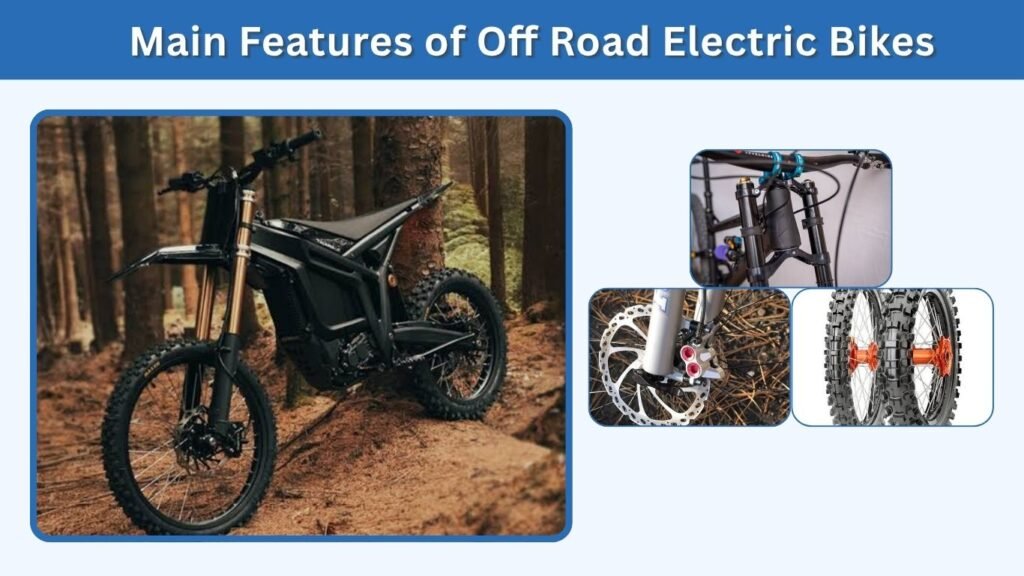
The best off road electric bikes are designed around control, durability, and traction rather than maximum pavement efficiency. Components need to cope with loose surfaces, vibration, steep climbs, and repeated braking. A balanced setup is usually more useful than simply choosing the bike with the largest motor.
Important Features to Look For
Key features may include:
- Wide off-road tires
- Front or full suspension
- Hydraulic disc brakes
- Reinforced wheels
- Durable frame
- High-capacity battery
- Mid-drive or rear-hub motor
- Low climbing gears
- Water-resistant electrical components
- Strong battery mounting
These features help make rough-terrain riding more manageable.
Strong Frame Construction
Off-road riding puts additional stress on a bike.
Frames need to handle repeated impacts from bumps, roots, gravel, and uneven surfaces. Aluminum is common because it provides a useful balance of strength and manageable weight.
Some heavier-duty models use steel or reinforced frame designs.
Aggressive Tires
Off-road tires usually have deeper tread than commuter tires.
The tread helps improve grip on loose dirt, gravel, mud, and uneven trails. Tire width also affects comfort and stability, with wider tires generally providing more flotation on soft terrain.
Benefits of an Off Road Electric Bike
An off-road e-bike can make demanding terrain more accessible while allowing riders to cover more distance with less fatigue. Electric assistance is particularly useful on climbs, loose surfaces, and longer routes where a traditional bicycle may require significantly more effort.
Main Benefits
An electric off-road bike may offer:
- Easier hill climbing
- Greater riding range
- Reduced fatigue
- Better access to remote trails
- Improved cargo capability
- Stable handling on rough terrain
- Useful assistance for long rides
- More flexibility for recreational riding
The benefits depend heavily on the bike’s design and terrain.
Easier Climbing
Electric assistance can make steep terrain easier to manage.
Mid-drive systems can be especially effective because they use the bike’s gearing, allowing the motor to operate efficiently during climbs.
This can help riders maintain a more consistent cadence uphill.
Longer Trail Rides
Battery assistance allows many riders to travel farther than they might on a standard mountain bike.
However, off-road terrain can consume battery power quickly, especially when climbing, using high assistance levels, or riding on soft surfaces.
Motor Types for Electric Off Road Bikes
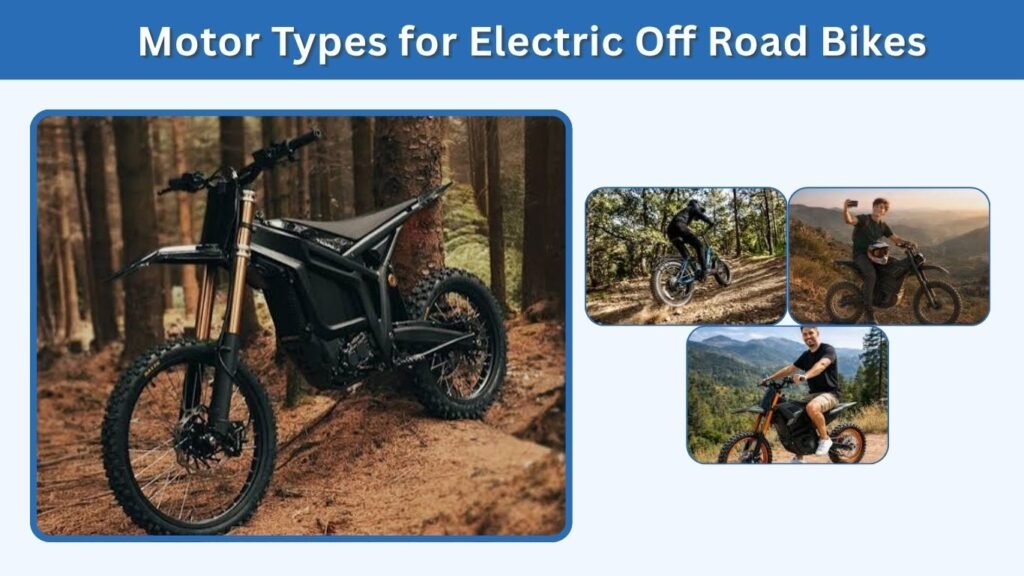
Motor placement affects climbing, handling, maintenance, and price. The two most common options are mid-drive and hub-drive systems.
Mid-Drive Motors
Mid-drive motors sit near the crankset and transfer power through the drivetrain.
Their main advantages include:
- Better climbing efficiency
- Centralized weight
- Effective use of bicycle gears
- Natural riding feel
- Better balance on technical terrain
They are commonly found on higher-end electric mountain bikes.
Rear-Hub Motors
Rear-hub motors are built into the rear wheel.
They are often more affordable and mechanically simple. For gravel roads, moderate trails, and general recreational use, a hub motor may provide enough performance.
The trade-off is that weight is concentrated toward the rear wheel.
Battery Range and Capacity
Battery size is an important part of choosing the best off road electric bike, but advertised range should not be treated as guaranteed. Rough terrain, hills, rider weight, tire pressure, weather, and assistance level can all reduce real-world distance.
Factors That Affect Range
Battery range depends on:
- Battery capacity
- Motor efficiency
- Rider weight
- Cargo weight
- Elevation gain
- Terrain
- Tire pressure
- Assist level
- Wind
- Temperature
Steep hills and loose dirt usually consume more energy than flat pavement.
Choose a Range Reserve
Do not plan a route that uses the entire advertised battery range.
Keeping a reserve is especially important when riding in remote areas because returning with a depleted battery can be difficult on a heavy e-bike.
Suspension for Off Road Electric Bikes

Suspension helps the tires maintain contact with uneven terrain and reduces the amount of impact reaching the rider. The appropriate setup depends on how rough your routes are.
Front Suspension
A suspension fork can absorb bumps from gravel roads, rough paths, and moderate trails.
It is usually lighter and less expensive than full suspension.
For casual off-road riding, front suspension may be sufficient.
Full Suspension
Full-suspension bikes include both front and rear suspension.
They are more suitable for:
- Rocky terrain
- Root-filled trails
- Rough descents
- Technical riding
- High-impact surfaces
They generally cost more and require additional maintenance.
Best Tires for Off Road Electric Bikes
Tire choice has a major effect on traction, stability, and rolling resistance. There is no single best tire for every type of off-road riding.
Mountain Bike Tires
Traditional mountain-bike-style tires are a strong choice for technical trails.
They provide predictable cornering and are generally lighter than fat tires.
Fat Tires
Fat tires can perform well on:
- Sand
- Loose soil
- Soft trails
- Some snow conditions
- Rough recreational terrain
Their extra width provides flotation and stability, although they add weight and rolling resistance.
Brakes for Off Road Electric Bikes
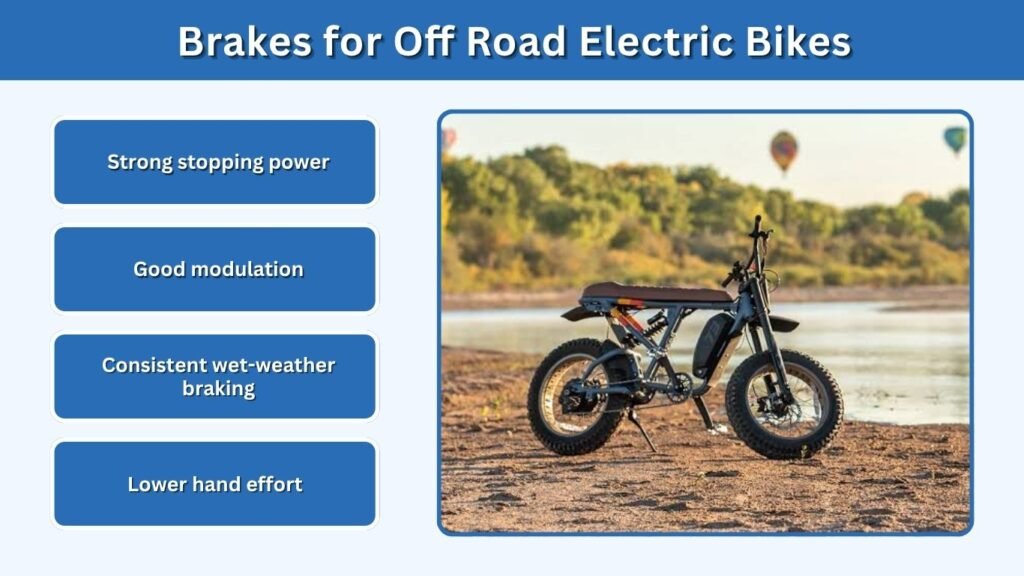
E-bikes are usually heavier than standard bicycles, so strong braking is especially important on steep or loose terrain.
Hydraulic Disc Brakes
Hydraulic disc brakes are commonly preferred for off-road riding because they provide:
- Strong stopping power
- Good modulation
- Consistent wet-weather braking
- Lower hand effort
- Reliable downhill control
They are especially useful on heavier and faster e-bikes.
Brake Rotor Size
Larger rotors generally provide better heat management and increased braking power.
This can be useful on long descents or when carrying additional cargo.
Off Road Electric Bike for Adults
An off road electric bike for adults should be matched to the rider rather than chosen only by motor power. Frame size, maximum load, bike weight, riding position, brakes, and terrain all matter.
What Adults Should Consider
Before buying, compare:
- Frame size
- Weight capacity
- Motor type
- Battery size
- Suspension travel
- Brake quality
- Tire width
- Bike weight
- Warranty
- Replacement battery availability
Fit and control should remain priorities.
Step-Through vs Traditional Frames
Some off-road electric bikes use lower step-through frames, while others use traditional diamond frames.
Step-through designs make mounting easier, but frame stiffness and intended terrain should also be considered.
Electric Off Road Dirt Bike vs E-Mountain Bike

The term electric off road dirt bike is often used alongside e-bike terminology, but the two categories can be quite different.
Electric Mountain Bike
An electric mountain bike usually includes functional pedals and is designed around bicycle-style trail riding.
It commonly uses pedal assistance and bicycle components.
Electric Dirt Bike
Electric dirt bikes may have much higher power and top speeds.
Some do not have functional pedals at all. Depending on local regulations, these machines may be treated more like motorcycles or off-highway vehicles than bicycles.
Off Road Electric Bike for Hunting
Electric bikes can also be useful for hunting because they can help riders travel quietly and carry gear over difficult terrain.
Useful Hunting Features
A hunting-oriented model may benefit from:
- Wide tires
- Long battery range
- Rear cargo rack
- Trailer compatibility
- Strong brakes
- Quiet motor operation
- Low climbing gears
- Durable frame
Battery planning becomes particularly important when traveling far from roads.
Cargo Capacity
Racks and trailers can make it easier to carry equipment.
However, additional weight reduces range and can change braking and handling, so always stay within the bike’s rated load limits.
How to Choose the Best Off Road Electric Bike
The best off road electric bike depends on where and how you ride. A bike designed for moderate gravel may not be suitable for steep technical terrain, while a heavy full-suspension model may be excessive for easy trails.
Key Buying Factors
Compare:
- Motor placement
- Motor torque
- Battery capacity
- Suspension
- Brake system
- Tire type
- Frame fit
- Total weight
- Service support
- Replacement parts
Avoid choosing based only on top speed.
Think About Maintenance
Off-road riding increases wear on tires, brake pads, chains, wheels, and suspension components.
A bike with commonly available replacement parts can be easier and less expensive to maintain over time.
Common Buying Mistakes
Many first-time buyers focus on motor wattage and ignore the features that actually affect control and comfort.
Mistakes to Avoid
Avoid:
- Buying the wrong frame size
- Choosing poor-quality brakes
- Ignoring battery replacement cost
- Underestimating bike weight
- Selecting unsuitable tires
- Buying unnecessary suspension
- Ignoring service availability
- Assuming every trail allows e-bikes
A balanced bike is usually better than the most powerful one.
Safety Tips for Off Road Electric Riding
Off-road e-bikes can be heavier and faster than conventional mountain bikes. Safe riding requires good equipment, careful speed management, and regular maintenance.
Basic Safety Equipment
Consider using:
- Properly fitted helmet
- Gloves
- Eye protection
- Suitable footwear
- Protective clothing
- Lights when visibility is poor
More powerful dirt-bike-style models may require additional protective equipment.
Inspect the Bike Before Riding
Check brakes, tire pressure, wheels, battery mounting, chain condition, and suspension before entering a trail.
Small mechanical problems can become much more serious on remote terrain.
FAQs
1. Are electric bikes good for off-road riding?
Yes, electric bikes designed specifically for off-road use can perform well on gravel, dirt trails, hills, and uneven terrain. Choose appropriate suspension, tires, and brakes for your riding conditions.
2. What is the best motor for an off road electric bike?
Mid-drive motors are often preferred for steep or technical trails because they use the bicycle’s gears and keep weight centralized. Hub motors can work well for gravel and moderate off-road riding.
3. Are fat-tire electric bikes good off road?
Yes. Fat tires provide stability and flotation on sand, loose soil, and some soft terrain. However, they are heavier and may feel less precise on technical trails.
4. How far can an off road electric bike go?
Range varies significantly with battery capacity, motor efficiency, rider weight, terrain, elevation, temperature, and assistance level. Off-road riding often consumes more battery than riding on smooth pavement.
5. Can an off road electric bike be ridden on public trails?
Sometimes. Access depends on local laws and trail rules. Some public trails permit certain e-bike classes, while others restrict electric bikes entirely, so always check regulations before riding.
