An off road electric bike offers an exciting way to explore rugged trails, mountain paths, muddy roads, and challenging outdoor terrain. Combining powerful electric motors with durable frames, advanced suspension systems, and high-traction tires, these bicycles make outdoor adventures more accessible and enjoyable. Whether you need an electric off road bike for hunting, recreational riding, or mountain exploration, choosing the right model is essential. This guide explains different types, motor performance, battery range, important features, popular models, and practical buying considerations for adults.
What Is an Off Road Electric Bike?
An off road electric bike is a motor-assisted bicycle designed to handle rough surfaces beyond ordinary paved roads. Unlike traditional electric commuter bikes, off-road models emphasize traction, stability, climbing performance, and durability. They often feature wider tires, stronger frames, improved suspension, and powerful braking systems. Depending on their design, they can tackle forest paths, gravel tracks, and challenging mountain trails.
How Does an Off Road Electric Bike Work?
Off-road electric bikes use rechargeable batteries to power electric motors that assist propulsion.
Most pedal-assist models activate the motor when the rider pedals. Some also include throttles that provide power without continuous pedaling.
The motor supports climbing and acceleration, while the bicycle’s suspension and tires help maintain stability across uneven terrain.
Main Benefits of Off Road Electric Bikes
Off-road electric bicycles provide several advantages over conventional bicycles.
- Easier hill climbing: Motor assistance reduces the physical effort required for steep climbs.
- Longer adventures: Electric support can help riders cover greater distances.
- Improved accessibility: Riders with different fitness levels can enjoy challenging routes.
- Better traction: Specialized tires improve grip on gravel, dirt, and loose surfaces.
- Versatile riding: Certain models work well for recreation, hunting, and utility transportation.
However, additional weight and battery limitations are important considerations.
Types of Off Road Electric Bikes

Off-road electric bikes are available in several configurations, each designed for particular riding conditions. Some prioritize maneuverability on narrow mountain trails, while others focus on traction across sand, mud, or loose gravel. High-powered electric dirt bikes form a separate category designed for more demanding motorized riding. Understanding these differences helps buyers select equipment appropriate for their intended environment.
Electric Mountain Bikes
Electric mountain bikes, commonly called e-MTBs, are designed for mountain trails and technical terrain.
They typically feature mid-drive motors, suspension forks, and mountain bike tires. Full-suspension models provide additional shock absorption for rocky descents.
These bicycles are particularly suitable for riders who enjoy technical trail riding.
Fat Tire Off Road Electric Bikes
Fat tire electric bikes use unusually wide tires, commonly around four inches.
Their increased tire volume can improve flotation on sand and snow when operated at suitable pressures. They also provide a comfortable experience on rough gravel roads.
However, fat tires alone do not guarantee excellent performance on technical mountain trails.
Electric Off Road Dirt Bikes
Electric dirt bikes are generally more powerful and motorcycle-like than conventional electric bicycles.
They may feature powerful motors, reinforced suspension, and specialized off-road tires.
Many do not meet standard electric bicycle classifications and may be restricted to designated motorized riding areas.
Important Features of an Electric Off Road Bike

An electric off-road bike needs more than a powerful motor to perform effectively on rugged terrain. Battery capacity, suspension quality, tire construction, and braking performance all influence comfort and handling. A balanced combination of these components often provides better real-world performance than focusing entirely on speed or motor wattage. Buyers should evaluate the complete bicycle rather than individual specifications.
Motor Power and Torque
Motor power influences acceleration and sustained assistance, while torque is particularly important for climbing.
Common considerations include:
- 250W motors: Often found on efficient electric mountain bikes.
- 500W motors: Used in some recreational and utility electric bicycles.
- 750W motors: Popular among powerful fat tire electric bikes.
- Mid-drive systems: Deliver assistance through the bicycle’s drivetrain.
- Torque output: Helps determine climbing responsiveness and low-speed performance.
Motor wattage alone does not determine overall trail capability.
Battery Capacity and Riding Range
Battery capacity is measured in watt-hours (Wh). A larger battery generally stores more energy, although actual riding distance depends on several factors.
For example, a 720Wh battery may support extended trail riding, but steep climbs and aggressive motor assistance can substantially reduce range.
Terrain, rider weight, temperature, tire pressure, and assistance settings all influence battery performance.
Suspension, Tires, and Brakes
A quality off-road electric bicycle should provide controlled suspension and dependable braking. Hydraulic disc brakes are particularly useful on demanding descents.
Suspension travel should match the riding environment, while tire tread and pressure should be selected for the expected terrain.
Best Off Road Electric Bike Models to Consider
Several manufacturers offer electric bicycles designed for recreational trails and all-terrain riding. Popular models differ considerably in motor configuration, battery size, suspension design, and intended use. Some work well for gravel roads and forest tracks, while others prioritize aggressive off-road performance. Comparing actual specifications and trail compatibility is more useful than relying only on advertised maximum speeds.
Rundeer Attack10 Off Road Electric Bike
The Rundeer Attack10 electric bike is designed for all-terrain recreational riding.
It features a Bafang motor advertised at 1,200W peak output, a 960Wh removable battery, and 20-by-4-inch fat tires.
Its hydraulic brakes and suspension components support riding on gravel and uneven terrain.
Rad Power Bikes Radster Trail
The Radster Trail electric bike combines utility features with off-road-oriented design.
It uses a 750W motor, wide tires, and hydraulic disc brakes. Rad Power Bikes advertises a maximum assisted speed of 28 mph and a range exceeding 65 miles under favorable conditions.
The Radster Trail is suited to riders seeking a versatile electric bicycle for mixed riding environments.
High-Powered Electric Dirt Bikes
Models such as the G300 Pro and Freego Nova 5 appeal to riders interested in motorcycle-style electric off-road machines.
These vehicles are designed differently from conventional pedal-assist mountain bikes.
Their speed, power, and regulatory classification require particular attention before purchase.
How Fast Can an Off Road Electric Bike Go?
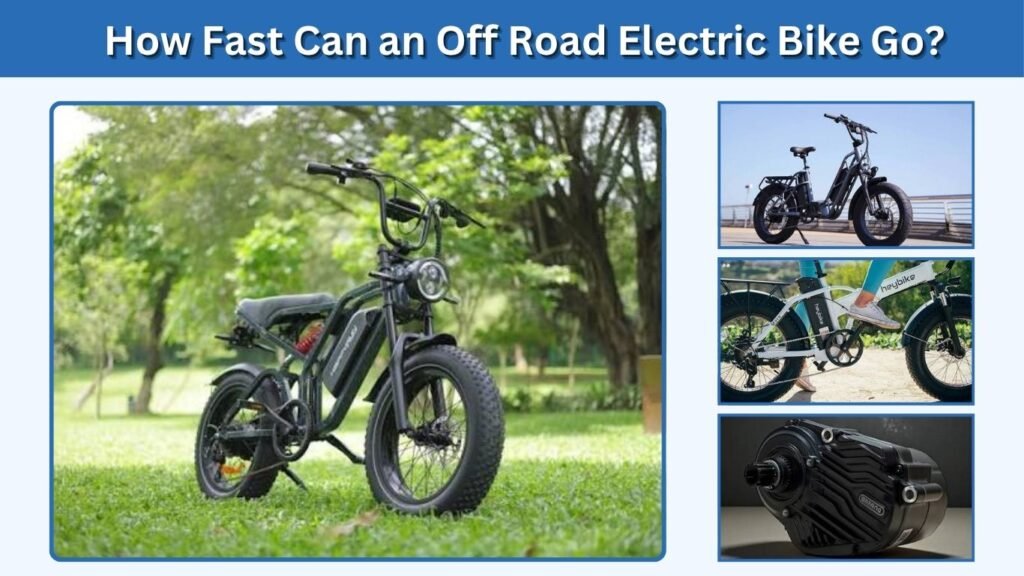
Off-road electric bike speed varies considerably depending on motor output, gearing, terrain, and vehicle classification. Conventional pedal-assist bicycles commonly operate within regulated assistance limits, while high-powered electric dirt bikes can achieve substantially higher speeds. However, maximum speed is not necessarily the most important performance measurement for off-road use. Traction, climbing ability, braking control, and maneuverability often matter more.
Electric Bike Speed Classes
In the United States, the commonly used electric bicycle classifications include:
| Classification | Motor Assistance Limit |
| Class 1 | Pedal assist up to 20 mph |
| Class 2 | Throttle assistance up to 20 mph |
| Class 3 | Pedal assist up to 28 mph |
State regulations and permitted riding areas can differ.
What Is the Fastest Off Road Electric Bike?
There is no single fastest model across all off-road electric vehicle categories.High-performance electric dirt bikes can exceed conventional electric bicycle speed limits, but they should not be confused with standard trail-legal e-bikes. A faster machine is not automatically better for technical riding.
How to Choose the Best Off Road Electric Bike for Adults
Choosing an off-road electric bike requires matching the bicycle’s capabilities with the rider’s environment, experience, and budget. A lightweight electric mountain bike might be ideal for technical trails, while a fat tire model may provide greater comfort on sandy or uneven tracks. Buyers should also evaluate battery replacement costs, local riding regulations, and access to maintenance services.
Factors to Consider Before Buying
Important buying considerations include:
- Terrain: Choose appropriate tires and suspension for mountain trails, gravel, or sand.
- Motor system: Consider torque, responsiveness, and climbing performance.
- Battery: Compare usable capacity and realistic riding range.
- Frame fit: Select geometry suitable for your height and riding style.
- Braking system: Prioritize reliable hydraulic disc brakes for demanding terrain.
- Weight: Consider how easily the bicycle can be transported or lifted.
- Support: Check warranty coverage and replacement parts availability.
How Much Does an Off Road Electric Bike Cost?
Entry-level recreational off-road electric bicycles may cost approximately 800–1,500.
More capable fat tire and trail-oriented models commonly occupy the 1,500–3,000 range.
Premium electric mountain bikes can cost 4,000–8,000 or more, depending on their motors, suspension, batteries, and components.These are approximate market ranges rather than fixed prices.
Off Road Electric Bikes for Hunting and Outdoor Adventures
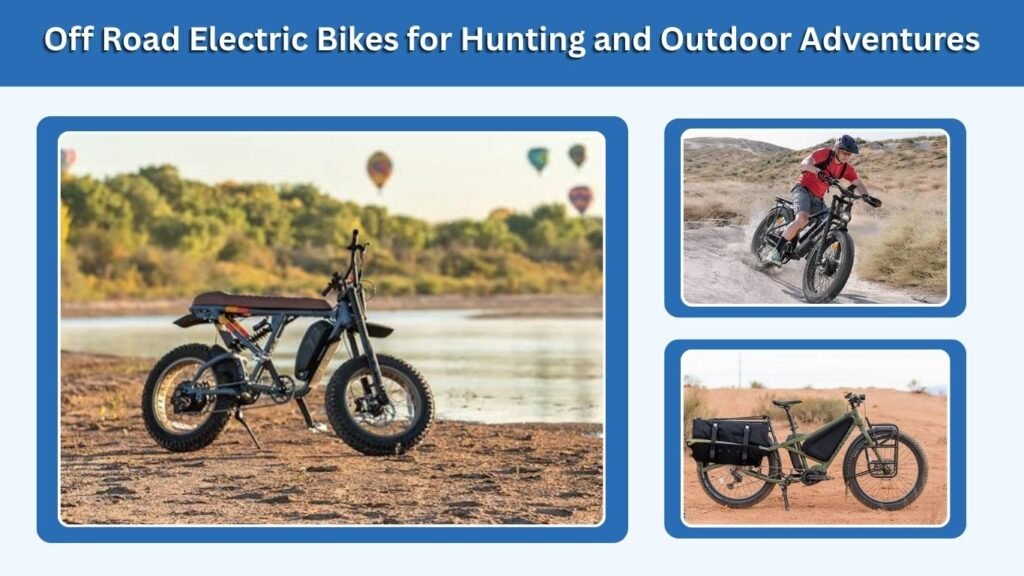
Electric off-road bikes are increasingly used for outdoor recreation and hunting-related transportation. Their electric assistance can reduce the physical effort involved in carrying equipment along approved access routes. However, their effectiveness depends on battery capacity, cargo capability, traction, and the specific landscape. Riders must also consider land access restrictions before taking an electric bicycle into hunting areas.
Why Hunters Use Electric Off Road Bikes
An electric bicycle can help hunters transport equipment along suitable trails and access roads.
Compared with some gasoline-powered vehicles, an e-bike generally produces less operating noise and has no exhaust emissions during riding.
Fat tires and cargo racks can be useful, although extra weight reduces range and changes handling.
Are Off Road Electric Bikes Allowed on Trails?
Trail access depends on the bicycle’s classification and the rules established by local land managers.
In the United States, federal public-land agencies can apply different restrictions, and some nonmotorized trails prohibit electric bicycles entirely.
Riders should confirm permission before entering a trail, particularly when using high-powered models.
PeopleForBikes
Maintenance and Safety Tips for Off Road Electric Bikes
Regular maintenance is essential because rough terrain places additional stress on bicycle components. Dirt, water, vibration, and repeated impacts can accelerate wear on tires, brakes, chains, and suspension systems. Electric components also require appropriate care to maintain reliability. Developing simple inspection and cleaning habits helps improve safety, reduce unexpected mechanical problems, and extend the bicycle’s useful life.
Essential Maintenance Practices
Before each ride, inspect tire pressure, braking performance, battery mounting, and visible component damage.
After muddy rides, clean the bicycle using the manufacturer’s recommended methods. Avoid directing high-pressure water at electrical connections, bearings, and motor seals.
Keep the drivetrain lubricated and inspect suspension components regularly.
Safe Riding Practices
Wear an appropriate helmet and protective equipment, particularly when riding technical terrain.
Reduce speed on unfamiliar trails and maintain control during steep descents.
Use only manufacturer-approved charging equipment, and avoid charging damaged batteries.
FAQs
1. Are Off Road Electric Bikes Good for Beginners?
Off-road electric bikes can be suitable for beginners when they have manageable motor assistance, predictable handling, and appropriate suspension. New riders should start on easy gravel paths or beginner-friendly trails before attempting steep or technical terrain. Proper protective equipment and basic bicycle-handling skills are essential.
2. How Far Can an Off Road Electric Bike Travel?
An off-road electric bike may travel approximately 20–60 miles per charge, depending on its battery capacity, motor efficiency, and riding conditions. Some models advertise longer distances under ideal conditions. Steep terrain, heavy loads, frequent acceleration, and high assistance settings can significantly reduce the actual range.
3. Can You Ride an Off Road Electric Bike in the Rain?
Many off-road electric bikes can tolerate light rain and wet trails when their manufacturer permits such use. However, water resistance varies between models. Avoid deep water, submerged electrical components, and pressure washing. Dry the bicycle after wet rides and inspect its brakes, drivetrain, and electrical connections.
4. What Is the Best Motor Size for an Off Road Electric Bike?
The best motor depends on the intended terrain and riding style. Efficient 250W mid-drive systems can perform exceptionally well on mountain trails, while 500W and 750W systems are common on recreational all-terrain bikes. Torque delivery, gearing, efficiency, and legal classifications matter as much as wattage.
5. Are Off Road Electric Bikes Worth Buying?
Off-road electric bikes can be worthwhile for riders who frequently explore trails, tackle hills, or need assistance carrying equipment. They provide additional propulsion and can make longer rides more manageable. However, higher purchase costs, battery maintenance, extra weight, and trail access restrictions should be considered before buying.
