Finding the correct road bike saddle position is essential for comfortable cycling, efficient pedaling, and maintaining proper body alignment. An incorrectly positioned saddle can cause knee discomfort, lower back strain, and excessive pressure on sensitive areas during longer rides. Saddle height, forward-backward placement, and tilt all influence how your body interacts with the bicycle. Whether you are a beginner or an experienced cyclist, understanding these adjustments can improve your riding experience. This guide explains proper saddle positioning, recommended measurements, common mistakes, and practical adjustment techniques.
What Is the Correct Road Bike Saddle Position?
The correct road bike saddle position allows cyclists to pedal comfortably while maintaining stable hips and balanced body weight. Unlike a fixed measurement, ideal saddle placement depends on individual leg length, flexibility, riding style, and bicycle geometry.Three main adjustments determine saddle position: height, fore-aft placement, and tilt. Each affects comfort and pedaling mechanics differently.
How Saddle Position Affects Riding Performance
Saddle positioning influences knee movement, hip stability, and how efficiently cyclists apply force to the pedals. A well-adjusted saddle allows the legs to extend comfortably without excessive reaching or compression.An incorrect position may cause unnecessary upper-body movement or place excessive pressure on certain areas.Proper saddle placement also influences overall weight distribution between the handlebars and saddle. Finding a balanced setup helps cyclists maintain control while reducing discomfort during recreational rides, endurance cycling, and regular training.
How to Set the Correct Road Bike Saddle Height

Road bike saddle height is one of the most important adjustments in bicycle fitting. A saddle positioned too high may cause excessive leg extension, while a low saddle can create unnecessary knee bending.The goal is to achieve a comfortable pedaling movement with stable hips and smooth leg extension throughout the pedal stroke.
1. Use the Heel-to-Pedal Method
The heel method offers a simple starting point for estimating saddle height.
- Position your bicycle securely against a wall or on an appropriate stationary trainer.
- Sit naturally on the saddle while keeping your hips level.
- Place your heel on the pedal at its lowest position.
- Adjust the saddle until your leg is approximately straight without stretching or rocking your hips.
- Return your foot to its normal pedaling position and check for a slight knee bend.
This method provides an initial estimate rather than a precise universal fit measurement.
2. Check Knee Extension
With your foot positioned normally on the pedal, your knee should remain slightly bent at the bottom of the stroke.If your hips rock from side to side, the saddle may be too high. Excessive knee bending may indicate that the saddle is too low.Different riders require slightly different knee angles, so comfort and smooth pedaling should guide final adjustments.
3. Measure Your Saddle Height
Measure saddle height from the center of the bottom bracket to the saddle top, following the seat tube line. Record the measurement so you can compare adjustments accurately.Some fitters use inseam-based calculations as starting estimates, but these do not account fully for foot position, crank length, or individual biomechanics.Small adjustments followed by test rides provide more useful feedback.
How to Adjust Road Bike Saddle Fore-Aft Position
Fore-aft saddle position refers to how far forward or backward the saddle sits relative to the bicycle’s bottom bracket. This adjustment affects pedaling mechanics, hip position, and the distribution of body weight.Correct saddle setback varies between cyclists. Although traditional fitting methods provide useful starting points, the most comfortable position depends on overall bike fit and individual movement patterns.
Understanding Saddle Setback
Saddle setback is the horizontal distance between a defined point on the saddle and the bottom bracket’s vertical reference line.Moving the saddle forward changes the rider’s relationship to the pedals, while moving it backward produces the opposite effect.The traditional knee-over-pedal-spindle method checks knee alignment with the forward crank horizontal. However, this is only an initial fitting reference, not a universal requirement.
Finding the Right Fore-Aft Position
Begin with the saddle near the middle of its permitted rail adjustment range.Pedal naturally and evaluate whether your hips remain stable and your knees move comfortably.Make small adjustments if you experience excessive pressure or an awkward pedaling position.Avoid moving the saddle solely to compensate for handlebars that are too far away. Handlebar reach should be assessed separately after establishing a comfortable pedaling position.
What Is the Best Road Bike Saddle Angle?

Road bike saddle angle, also called saddle tilt, determines whether the saddle nose points upward, downward, or remains level. Even small changes can influence pressure distribution and pelvic stability.Most riders benefit from beginning with a nearly horizontal saddle. However, saddle shapes vary, and some designs require slightly different angles according to their manufacturer’s recommendations.
Flat Saddle Position
A level saddle is usually the most suitable starting position for road cycling.It supports stable body placement and helps prevent unnecessary sliding during pedaling.Use a spirit level across the manufacturer’s recommended reference surface when checking the angle.
Nose-Down Saddle Position
A slightly downward saddle angle may help some riders reduce pressure in sensitive areas.However, excessive downward tilt can cause forward sliding and increased weight on the hands, wrists, and shoulders.Adjust gradually rather than making large changes.
Nose-Up Saddle Position
An upward saddle angle may help some riders feel more stable, but excessive upward tilt can increase pressure on sensitive tissues.Persistent discomfort should prompt a review of saddle shape, width, and overall bicycle fit rather than continuing to increase the angle.
Common Road Bike Saddle Position Mistakes
Incorrect saddle positioning can create discomfort even when using a high-quality road bike saddle. Many cyclists experience problems because they adjust several components simultaneously or rely on measurements that do not suit their body proportions.Identifying common mistakes helps you make more effective adjustments and maintain a comfortable riding position during daily cycling and longer journeys.
Mistakes to Avoid
- Saddle too high: Can cause hip rocking, excessive leg extension, and discomfort behind the knees.
- Saddle too low: May create excessive knee bending and discomfort around the front of the knees.
- Excessive forward position: Can alter pedaling mechanics and place the rider in an uncomfortable position over the pedals.
- Excessive backward position: May increase the reach to the handlebars and affect hip and knee movement.
- Incorrect saddle tilt: Can cause sliding, pressure discomfort, or excessive weight on the hands.
- Ignoring saddle width: A saddle that does not adequately support the sit bones can create pressure and discomfort.
Persistent pain or numbness should be evaluated rather than ignored.
How to Adjust Your Road Bike Saddle Correctly
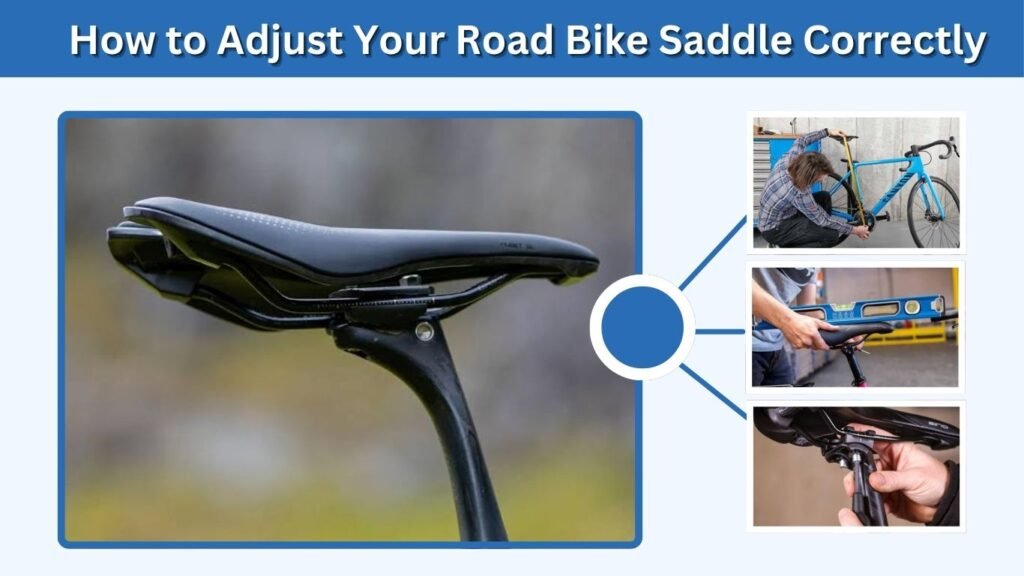
Adjusting your road bike saddle requires patience, careful measurements, and small changes. Even a few millimeters can noticeably affect comfort and pedaling mechanics.Before making adjustments, record your existing saddle measurements. This allows you to return to your previous setup if the changes do not improve your riding experience.
Step-by-Step Saddle Adjustment
- Position your bicycle: Place it securely on a stationary trainer or suitable support.
- Measure saddle height: Record the distance from the bottom bracket center to the saddle’s reference point.
- Adjust the height: Raise or lower the saddle gradually while maintaining proper seatpost insertion.
- Check fore-aft placement: Slide the saddle within its marked rail limits to find a comfortable pedaling position.
- Set saddle tilt: Begin with a level saddle and make minor adjustments if necessary.
- Tighten the bolts: Follow the seatpost manufacturer’s torque specifications.
- Take a test ride: Evaluate hip stability, knee comfort, and pressure distribution before making additional changes.
Park Tool recommends checking saddle height, fore-aft placement, and angle as distinct adjustments while following the relevant component specifications.
FAQs
1. What Is the Ideal Road Bike Saddle Position?
The ideal road bike saddle position allows comfortable knee extension, stable hips, and balanced body weight. Begin with a nearly level saddle and adjust its height and fore-aft placement according to your leg length, flexibility, and pedaling comfort.
2. How High Should a Road Bike Saddle Be?
A road bike saddle should allow a slight knee bend when the pedal reaches its lowest point. Your hips should remain stable without rocking from side to side. The exact height depends on individual body measurements and riding mechanics.
3. Should a Road Bike Saddle Be Level or Tilted?
Most road bike saddles should initially be positioned approximately level. Some riders benefit from a slight tilt depending on saddle design and anatomy. Excessive downward or upward angles may cause sliding, pressure discomfort, or increased strain on the hands.
4. Should My Road Bike Saddle Be Forward or Backward?
Your saddle should be positioned to support comfortable pedaling and appropriate weight distribution. The ideal fore-aft placement depends on bicycle geometry, leg proportions, and riding style. Avoid using saddle setback primarily to compensate for incorrect handlebar reach.
5. Can Incorrect Saddle Position Cause Knee Pain?
Yes, incorrect saddle height or fore-aft placement can contribute to knee discomfort during cycling. A saddle that is too high or low may alter knee movement and pedaling mechanics. Persistent knee pain requires professional fitting advice and, when appropriate, medical evaluation.
