Getting the right road bike tire pressure is essential for comfortable, efficient, and safe cycling. Too much air can make your ride harsh and reduce traction, while too little pressure can increase tire deformation, cause pinch flats, or damage your rims. The ideal pressure depends on tire width, rider weight, road conditions, and whether you use tubeless or traditional inner tubes. This guide explains recommended PSI ranges, pressure charts, calculators, and practical adjustments to help you find the best setup for your road bike.
What Is the Ideal Road Bike Tire Pressure?
The ideal road bike tire pressure varies depending on the tire and wheel combination. Modern road bicycles commonly use wider tires that can operate at lower pressures than traditional narrow racing tires.
Many riders using 28mm tires may find pressures around 60–80 PSI suitable, while wider 32mm tires often require less air. However, these figures are general examples rather than universal recommendations.
The correct pressure should support your weight, maintain traction, and absorb small road imperfections without allowing excessive tire deformation.
Factors That Determine Ideal Tire Pressure
- Rider Weight: Heavier cyclists generally require higher pressure.
- Tire Width: Wider tires can usually operate at lower pressures.
- Road Surface: Rough pavement often benefits from reduced pressure.
- Tire Construction: Tubeless and inner-tube setups may require different adjustments.
- Rim Design: Hooked and hookless rims have different compatibility requirements.
- Riding Style: Racing, commuting, and recreational cycling create different demands.
Always follow the pressure and compatibility limits specified by the tire and wheel manufacturers.
Road Bike Tire Pressure Chart by Tire Size
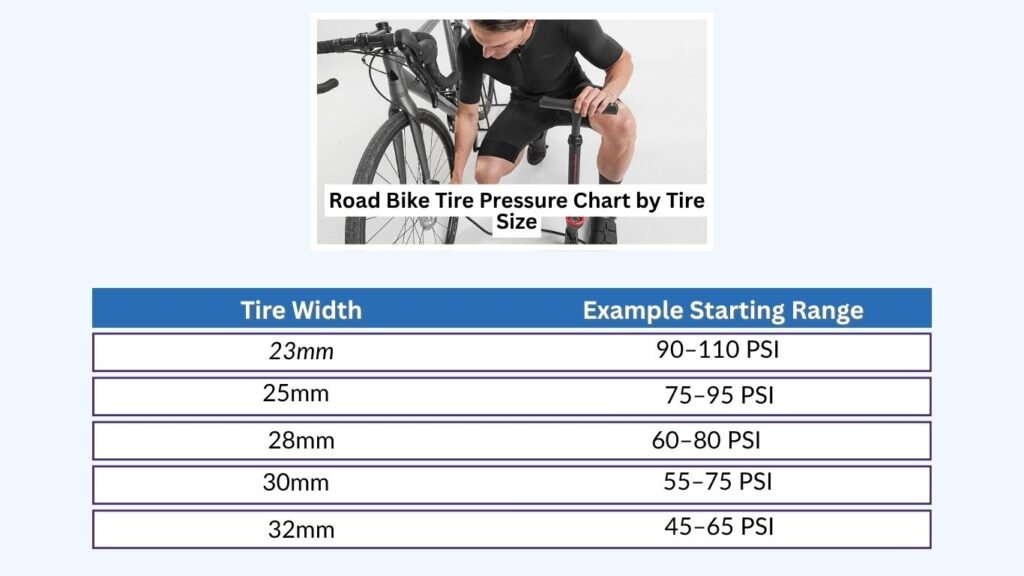
Tire width is one of the most important factors affecting inflation pressure. Narrow tires generally require higher pressures, while wider tires can support similar loads at lower pressures.
The following chart provides broad starting-point ranges for riders around 65–80 kg on paved roads using compatible equipment.
| Tire Width | Example Starting Range |
| 23mm | 90–110 PSI |
| 25mm | 75–95 PSI |
| 28mm | 60–80 PSI |
| 30mm | 55–75 PSI |
| 32mm | 45–65 PSI |
| 35mm | 40–60 PSI |
These are illustrative ranges, not minimum or maximum ratings. A particular wheel or tire may require substantially different pressures. Never use a value outside the limits of your actual equipment.
Why Wider Tires Use Lower Pressure
Wider tires contain more air volume, allowing them to support a rider at lower pressure without excessive deformation.
They can also absorb road vibration more effectively, improving comfort and sometimes rolling efficiency on imperfect pavement.
This is one reason many modern road bikes use 28mm, 30mm, or 32mm tires rather than traditional narrow racing tires.
Road Bike Tire Pressure by Rider Weight
Rider weight affects how much a tire compresses against the road. Heavier riders generally need additional pressure to maintain support, while lighter cyclists can often use less.
The total load includes the cyclist, bicycle, water bottles, luggage, and other equipment.
How Weight Changes Tire Pressure
A lighter cyclist using 28mm tires may prefer considerably less pressure than a heavier rider using the same tire.
For example, a 60 kg rider and a 90 kg rider should not automatically use identical settings, even when riding similar bicycles.
Exact adjustments depend on tire construction, wheel dimensions, and load distribution. A suitable tire pressure calculator provides a more reliable starting estimate than using body weight alone.
How to Use a Road Bike Tire Pressure Calculator

A road bike tire pressure calculator estimates suitable inflation settings using several measurements. It is useful when changing tire sizes, switching to tubeless tires, or adjusting pressure for different riding conditions.
Information Needed for Accurate Results
- Total System Weight: Include your body, bicycle, and carried equipment.
- Measured Tire Width: Use the actual inflated width when possible.
- Road Surface: Select smooth pavement, rough pavement, or another appropriate surface.
- Tire Setup: Identify whether you use inner tubes or tubeless tires.
- Wheel Specifications: Consider rim width and manufacturer pressure limitations.
- Weight Distribution: Account for differences between front and rear wheel loads.
Choosing the Best Calculator
SILCA, SRAM/Zipp, and certain tire manufacturers provide pressure calculation tools. Use a calculator as a starting point rather than an absolute instruction. Calculated values must remain within the approved limits for your specific tire and rim combination. After obtaining an estimate, test small adjustments under normal riding conditions.
Road Bike Tire Pressure for 25mm, 28mm and 32mm Tires
Different tire widths require different pressure approaches. Understanding these differences helps cyclists adjust their setups for comfort and performance.
25mm Road Bike Tire Pressure
A 25mm tire generally requires higher pressure than wider modern road tires carrying the same load. Some riders use approximately 75–95 PSI on compatible hooked-rim setups, although the correct value varies considerably with rider weight and equipment.The narrower air volume makes precise inflation particularly important.
28mm Road Bike Tire Pressure
A 28mm tire offers a useful balance of speed, comfort, and grip. Many riders use approximately 60–80 PSI, depending on weight and configuration. Some hookless wheel systems have maximum pressure limits below the upper end of this range.
For rough pavement, moderately reducing pressure within the approved range can improve comfort.
32mm Road Bike Tire Pressure
A 32mm tire provides additional air volume and can generally operate at lower pressure.
Some riders find approximately 45–65 PSI suitable on compatible setups. These tires are particularly useful for recreational cycling, commuting, and rougher paved surfaces.
The extra width can improve comfort without necessarily sacrificing substantial road efficiency.
Tubeless Road Bike Tire Pressure vs Inner Tubes

Tubeless road tires operate without traditional inner tubes and use an airtight tire-and-rim system, typically with sealant.
They can reduce punctures caused by small objects and eliminate traditional tube pinch flats.
Tubeless Road Bike Tire Pressure
Tubeless setups may allow lower pressure because there is no inner tube to become pinched between the tire and rim.
However, excessively low pressure can still cause rim strikes, poor handling, or air loss at the tire bead.
Hookless rims require particular attention to tire compatibility and maximum inflation limits. Some hookless road systems have a maximum of approximately 72.5 PSI or 5 bar, while individual rims may have lower limits.
Road Bike Tube Tire Pressure
Traditional clincher tires with inner tubes remain popular because they are familiar and straightforward to repair. They may need slightly higher pressures to reduce the likelihood of pinch flats, depending on the tire and conditions.Correct inflation still depends on total weight, tire width, and the manufacturer’s specifications.
Front vs Rear Road Bike Tire Pressure
The front and rear wheels of a road bicycle usually carry different loads. On many bicycles, more weight rests on the rear wheel, which means it may benefit from slightly higher pressure.
Should Front and Rear Pressure Be Different?
Yes, different pressures can be beneficial when the wheel loads differ. For example, a rider might use 65 PSI in the front and 70 PSI in the rear with a suitable tire-and-rim combination.
However, the exact difference depends on riding position, bicycle geometry, tire width, and weight distribution.
Pressure calculators that account for front and rear loading can provide more individualized recommendations.
How to Check Road Bike Tire Pressure

Checking tire pressure regularly helps maintain predictable handling, rolling performance, and tire condition.
Air naturally escapes over time, and some high-performance tires lose measurable pressure between rides.
Step-by-Step Tire Pressure Check
- Locate the tire valve and remove its protective cap.
- Open the small valve nut if your bicycle uses a Presta valve.
- Attach a compatible pressure gauge or pump head securely.
- Read the current inflation pressure.
- Add or release air until the desired setting is reached.
- Remove the gauge and close the valve properly.
- Repeat the process for the other wheel.
Choosing a Road Bike Tire Pressure Gauge
Digital pressure gauges can provide convenient readings while quality floor pumps often include integrated gauges.Choose a gauge that works with your valve type and measures accurately across your expected pressure range. For consistent results, use the same reliable gauge when comparing pressure adjustments.
How Road Conditions Affect Tire Pressure
Road conditions influence traction, comfort, and rolling resistance. Smooth pavement and rough asphalt may require different pressures even when using the same bicycle.
Adjusting Pressure for Different Surfaces
- Smooth Pavement: A relatively firm setup may feel efficient, within the recommended range.
- Rough Asphalt: Slightly lower pressure can improve comfort and reduce vibration.
- Wet Roads: Appropriate pressure and good tire condition support predictable grip.
- Light Gravel: Wider tires at suitable lower pressures can improve stability.
- Long-Distance Riding: Comfort-focused pressure adjustments may reduce fatigue.
Avoid assuming that maximum tire pressure always produces maximum speed. On rough surfaces, excessively high pressure can increase vibration and energy loss.
Common Road Bike Tire Pressure Mistakes

Incorrect inflation can affect bicycle handling, tire wear, comfort, and safety. Many problems occur because riders rely on outdated recommendations or ignore equipment limitations.
Mistakes to Avoid
- Inflating every road tire to the same PSI.
- Assuming the tire sidewall maximum is the ideal riding pressure.
- Ignoring rim-specific pressure limits.
- Running excessively low pressure with inner tubes.
- Using incompatible tires on hookless rims.
- Forgetting to check pressure before long rides.
- Adjusting pressure without considering rider weight.
- Relying entirely on how firm the tire feels by hand.
Regular pressure checks and small, controlled adjustments help maintain consistent riding performance.
FAQs
1. What PSI should road bike tires be?
Road bike tire pressure commonly ranges from approximately 45 to 100 PSI, depending on tire width, rider weight, and equipment. Narrow tires generally require higher pressure, while wider tires operate at lower settings. Always follow manufacturer limits rather than relying on a universal PSI recommendation.
2. Is 80 PSI good for road bike tires?
80 PSI can be suitable for certain narrow road tires and compatible rim setups. However, it may be unnecessarily high for wider tires or exceed the permitted pressure of some hookless wheels. Consider tire width, rider weight, and manufacturer specifications before using it.
3. What is the ideal tire pressure for a 28mm road bike tire?
Many riders use approximately 60–80 PSI with 28mm road bike tires, although individual recommendations vary. Tubeless setups, lighter riders, and certain wheel designs may require lower pressures. Use a reliable calculator and confirm the permitted limits of both the tire and rim.
4. Should road bike tire pressure be higher in the rear?
Rear tire pressure is often slightly higher because the rear wheel generally supports more weight. However, the correct difference depends on bicycle geometry, rider position, and load distribution. A tire pressure calculator can estimate suitable separate values for both wheels.
5. How often should I check my road bike tire pressure?
Check road bike tire pressure before important rides and regularly throughout the week. Some high-pressure or tubeless setups lose air more quickly than others. A reliable gauge helps identify pressure changes and maintain consistent handling, comfort, and rolling performance.
