Choosing the right road cycling bike for beginners is an important step toward enjoying comfortable, safe, and efficient rides. With so many bicycle styles, frame materials, and gear systems available, finding your first road bike can feel overwhelming. Fortunately, beginners don’t need expensive racing bicycles to start cycling. A comfortable, well-fitted bike with reliable components is often the best choice. This guide covers beginner-friendly road bikes, essential features, sizing, equipment, and practical cycling tips to help you get started confidently.
What Is a Road Cycling Bike?
A road cycling bike is a lightweight bicycle designed primarily for riding on paved roads. These bikes typically feature narrow tires, drop handlebars, and efficient gearing systems that help cyclists maintain speed over longer distances.
Unlike mountain bikes, road bicycles prioritize pedaling efficiency and smooth handling rather than technical off-road performance.
Main Features of Road Cycling Bikes
- Lightweight aluminum or carbon fiber frames.
- Drop handlebars with multiple hand positions.
- Narrow or moderately wide road tires.
- Multiple gears for climbing and descending.
- Efficient frame geometry for paved surfaces.
- Rim or disc braking systems.
For beginners, comfort, proper sizing, and predictable handling should take priority over racing performance.
Best Types of Road Cycling Bikes for Beginners
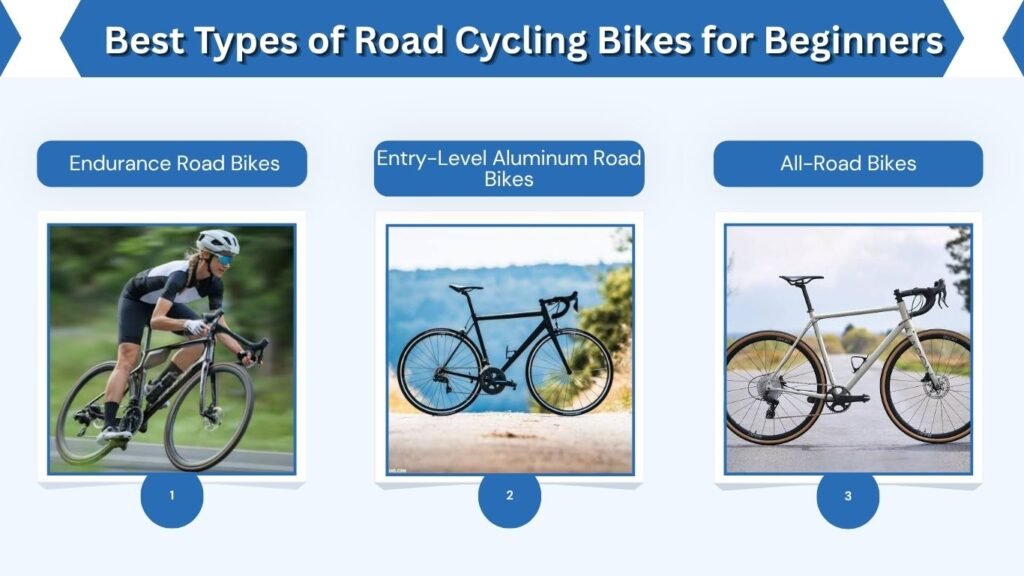
Different road bicycles are designed for different riding styles. Some emphasize long-distance comfort, while others prioritize speed and aggressive performance. Understanding these differences helps beginners select a bicycle that matches their experience and cycling goals.
1. Endurance Road Bikes
Endurance road bikes are among the best choices for beginners because they feature relatively relaxed frame geometry and comfortable riding positions.
They generally have taller front ends, manageable handlebar reach, and room for wider tires. These characteristics make them suitable for fitness cycling, weekend rides, and longer distances.
2. Entry-Level Aluminum Road Bikes
Aluminum road bikes offer a practical balance of affordability, weight, and durability. Many entry-level models include carbon fiber forks that help reduce road vibrations. They also feature dependable mechanical shifting systems and gearing suitable for recreational cycling.
Aluminum models are excellent for beginners who want road-bike performance without spending heavily on premium carbon frames.
3. All-Road Bikes
All-road bikes combine road cycling efficiency with additional versatility. They generally support wider tires and can handle rough pavement, compacted gravel, and occasional unpaved paths.
These bicycles are suitable for beginners who ride on mixed road surfaces but still want the efficiency of drop handlebars.
Best Beginner Road Bikes to Consider
Several established bicycle manufacturers offer road bike models suitable for first-time cyclists. Models with endurance geometry, manageable gearing, and comfortable tire clearance are especially worth considering.
Popular Beginner Road Bike Models
| Road Bike | Best For |
| Trek Domane AL | Endurance and long rides |
| Specialized Allez | Fitness and recreational cycling |
| Giant Contend | Everyday road cycling |
| Cannondale Synapse Alloy | Comfort-oriented road riding |
| Liv Avail | Endurance cycling and accessible sizing options |
These are established model families, but their specifications and availability vary by model year and market. Buyers should compare exact configurations rather than relying on model names alone.
How to Choose the Best Beginner Bike for Road Cycling

Choosing a first road bicycle involves more than finding an attractive design. Frame geometry, component quality, gearing, and comfort can significantly influence your cycling experience. Understanding the important specifications helps prevent expensive buying mistakes.
Frame Material and Weight
Aluminum is an excellent frame material for beginners because it is relatively lightweight, durable, and affordable. Carbon fiber bicycles can offer excellent performance but usually cost more. Beginners generally benefit more from proper sizing and comfortable tires than small differences in frame weight.
Gearing and Drivetrain
A beginner-friendly road bike should have a gearing range suitable for both flat roads and climbs. Compact or subcompact cranksets combined with a wide-range rear cassette can make hills easier to manage. Reliable entry-level Shimano or equivalent drivetrain components are usually sufficient for everyday cycling.
Brakes and Tire Width
Disc brakes provide dependable stopping performance, especially in wet conditions, although properly maintained rim brakes can also work well.
Tires approximately 28–32mm wide are a practical starting point for many beginners, provided the frame supports them. Wider tires can improve comfort and grip on uneven pavement.
Bike Fitting Guide for Road Cycling Beginners
Proper bicycle fitting is one of the most important aspects of comfortable road cycling. An incorrectly sized frame can cause discomfort, affect handling, and make longer rides unnecessarily difficult.
Beginners should consider their height, inseam length, flexibility, and preferred riding position before selecting a frame.
Choosing the Right Frame Size
Road bicycle frames are commonly measured in centimeters or classified using sizes such as XS, S, M, L, and XL.
However, sizing differs between manufacturers. Always consult the specific bicycle’s sizing chart rather than relying on general measurements.A test ride can help determine whether the frame feels comfortable and manageable.
Adjusting Saddle Height
Set the saddle at a height that allows a slight bend in your knee near the bottom of the pedal stroke. An excessively low saddle may increase knee strain, while a saddle positioned too high can cause uncomfortable hip movement. Make small adjustments until pedaling feels smooth and controlled.
Handlebar Position and Reach
The handlebars should allow you to maintain a comfortable upper-body position without excessively stretching your arms. Your elbows should remain slightly relaxed, and you should be able to reach the brakes easily. A professional bicycle fitting can be helpful if you experience persistent neck, back, or hand discomfort.
Essential Road Cycling Equipment for Beginners
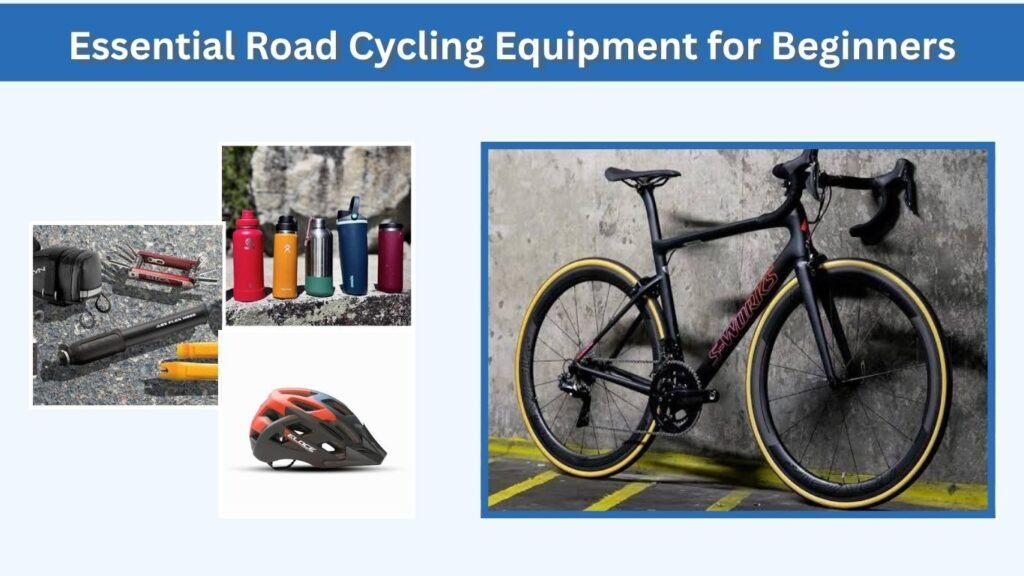
Having the right equipment improves comfort, visibility, and preparedness. Beginners do not need expensive accessories, but several practical items are important for everyday rides.
Basic Cycling Equipment
- Cycling helmet: Choose a properly fitted helmet that meets applicable safety standards.
- Front and rear lights: Improve visibility in different lighting conditions.
- Water bottle: Helps maintain hydration during rides.
- Cycling shorts: Padded shorts can improve saddle comfort.
- Repair kit: Carry a spare tube or suitable tire repair supplies.
- Mini pump: Useful for roadside tire inflation.
- Cycling gloves: Can improve grip and hand comfort.
Start with essential safety and repair equipment before purchasing optional performance accessories.
Best Road Bike Cycling Shoes for Beginners
Choosing cycling shoes depends on your experience, pedal preference, and riding goals. Beginners can start with comfortable athletic shoes and flat pedals before deciding whether to use clipless cycling systems.
Flat Pedals vs. Clipless Pedals
Flat pedals are simple to use and allow cyclists to place their feet on the ground quickly. They are suitable for beginners learning road-bike handling. Clipless pedals attach cycling shoes to the pedals using cleats, providing a secure connection during riding. However, beginners should practice clipping in and releasing their shoes in a safe location before using them on busy roads.
Cycling Tips for Beginners on a Road Bike
Developing good cycling habits makes road riding safer, more comfortable, and more enjoyable. Beginners should start with short, manageable rides and gradually increase their distance as fitness and confidence improve.
Important Road Cycling Tips
- Begin with short rides on quiet, familiar roads.
- Practice braking and changing gears before riding in traffic.
- Maintain a comfortable, steady pedaling rhythm.
- Look ahead and anticipate potholes or road hazards.
- Follow traffic laws and communicate turns clearly.
- Increase weekly riding distance gradually.
- Take breaks and drink water when necessary.
Consistency is more important than speed when developing cycling fitness.
How to Shift Gears on a Road Bike
Learning how to shift gears correctly improves efficiency and makes climbing hills less tiring. Most modern road bicycles use integrated gear shifters positioned near the brake levers.
Understanding Easy and Hard Gears
Easy gears reduce pedaling resistance and are useful when climbing hills or accelerating from a stop. Harder gears provide greater resistance and are more suitable for maintaining higher speeds on flat roads or descents. Shift to an easier gear before reaching a steep hill rather than waiting until pedaling becomes difficult. Avoid placing excessive pressure on the pedals during gear changes.
Common Mistakes Beginner Road Cyclists Should Avoid
New cyclists sometimes focus too heavily on bicycle speed, expensive components, or riding long distances immediately. However, developing fundamental riding skills and comfortable habits is more beneficial.
Mistakes to Avoid
Beginners should avoid choosing an incorrectly sized bicycle simply because it is discounted. Another common mistake is using excessively hard gears, which can make pedaling inefficient and uncomfortable. Riding without checking tire pressure, brakes, and chain condition may also create avoidable mechanical problems. Finally, increasing distance too quickly can lead to fatigue and discomfort. Gradual progression provides a more sustainable approach to cycling.
How to Maintain a Beginner Road Bike
Regular maintenance keeps a road bike functioning properly and can help prevent unexpected mechanical issues. Most basic maintenance tasks are simple enough for beginners to learn.
Basic Road Bike Maintenance
Check tire pressure before rides and inflate tires according to the manufacturer’s recommended range.Clean the chain regularly and apply appropriate bicycle chain lubricant when necessary. Inspect brake pads, cables, and drivetrain components for signs of wear. Keep the bicycle clean, especially after riding through rain or dirty conditions. Schedule professional servicing when shifting, braking, or wheel performance becomes unreliable.
FAQs
1. What Is the Best Road Cycling Bike for Beginners?
An endurance road bike with an aluminum frame, comfortable geometry, reliable gears, and moderately wide tires is a strong choice. Models such as the Trek Domane AL, Giant Contend, and Specialized Allez are worth comparing based on fit and budget.
2. How Much Should Beginners Spend on a Road Bike?
Beginners can find suitable road bikes across different price ranges. A reliable entry-level bicycle is usually more practical than an expensive racing model. Prioritize frame fit, component quality, and necessary accessories rather than spending heavily on advanced performance features.
3. How Many Miles Should a Beginner Road Cyclist Ride?
Beginners can start with approximately 5–10 miles per ride, depending on fitness and experience. Increase distance gradually as endurance improves. Short, consistent rides are often more effective than attempting long distances immediately, particularly when learning basic bicycle handling.
4. Is Road Cycling Difficult for Beginners?
Road cycling can feel challenging initially because of drop handlebars, shifting systems, and riding position. However, most beginners become more comfortable through regular practice. Starting on quiet roads and learning basic handling techniques can make the transition easier.
5. Do Beginners Need Special Road Cycling Shoes?
No, beginners can ride comfortably using regular athletic shoes with flat pedals. Specialized cycling shoes become useful when transitioning to clipless pedal systems. Proper fit, safe pedal operation, and comfort are more important than purchasing expensive cycling shoes immediately.
